Best Sim Racing Wheels & Rims
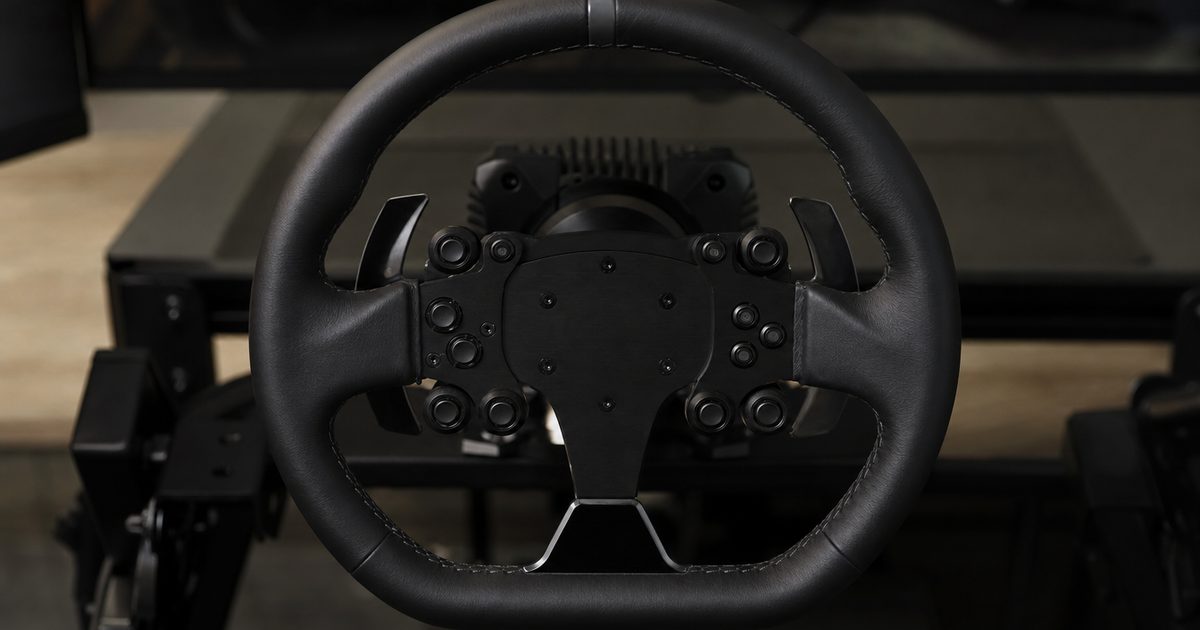
The rim is the part you hold and the part that turns one base into many cars — but only if it fits. This guide explains the specs that decide the rim — diameter, material, buttons, display, quick-release (QR) and sim compatibility — then matches them to five categories: best overall, best budget, best GT rim, best formula rim and best rally rim. Verified picks appear in each slot once real product data is in.
A note on how to read this. There is no single "best" rim for everyone — the right one depends on the cars you race, the base you already own, and how much in-car control you want at your fingertips. So the value here is the framework: what each spec changes, so you can shortlist a rim that fits both your base and your driving. Read the framework first, then look at the picks. The one thing I will say from years of league nights: the rim is the part you actually hold, so feel and fit matter more than the button count, and the fastest way to waste money on a rim is to buy one that does not match your base's quick-release.
Specs verified against manufacturer details and current Amazon listings — no hands-on testing claims. Diameter, material, button count, display and quick-release fit are drawn from published manufacturer specs.
How to choose a sim racing rim
A handful of specs decide whether a rim suits you — and whether it fits your base at all.
Rim type and diameter
Rim type is the first decision because it changes how a car steers in your hands. GT rims are round and the most versatile — they suit the widest range of cars and feel the most natural for road and GT racing, which is why they are the standard first wheel. Formula rims are flat-bottomed, button-heavy and smaller, built for single-seaters where the wheel barely passes a quarter-turn lock-to-lock. Rally rims are round and usually suede, sized and weighted for the fast hand-over-hand corrections rally and drift demand.
Diameter rides alongside type and affects both feel and fit. A larger round GT or rally rim gives natural road-car steering but asks more of a light base to swing; a smaller formula rim is quicker between the hands and easier on an entry wheelbase. Most racers start with a GT rim and add a second only once their content focuses on single-seaters or rally — the wheels hub compares the families in more depth if you are weighing a first versus a second rim.
Quick-release and sim compatibility
Quick-release (QR) is the spec that decides whether a rim mounts your base at all, and it is the one to check before any other. QR is tied to the base's ecosystem — Fanatec, Moza, Logitech or Thrustmaster — so a rim built for one brand often will not connect to another's base without an adapter, if an adapter exists. Spec-by-spec, a beautiful rim with the wrong QR is simply a rim you cannot use, which is why this check comes first.
The practical order is to confirm QR fit against your wheelbase first, then look at how the rim plays with your sims — iRacing, ACC and the rest. Most modern rims are broadly sim-agnostic on PC, but button-box mapping and display support can vary, so it is worth a quick check that the rim's controls and any screen are supported in the titles you actually race. Get fit and sim support settled, and the rest of the decision is preference.
Buttons, display and material
Once type and fit are settled, the remaining specs are preference layers. Buttons and encoders add in-car control — traction control, brake bias, wipers, lights — without taking a hand off the wheel; a built-in display adds an at-a-glance dash for speed, gear, delta and shift lights; and the rim material (alcantara, leather or carbon trim) sets the grip and the feel under your palms over a long stint.
None of these change whether the rim works on your base, so they should come after the type and QR decision, not before. A racer who maps controls to a separate button box may not need a dense rim at all; one who runs endurance stints may value alcantara grip and an on-rim display more than an extra row of buttons. Decide the fit first, then let buttons, display and material break the tie between rims that all fit.
The rims compared
A short list of widely available sim racing rims, compared on the specs above. Specs are verified against manufacturer details and current Amazon listings — no hands-on testing claims.
| Best for | Diameter | Material | Buttons | QR | Sim-compat |
|---|---|---|---|---|---|
| Best overall | 330 mm | Suede / aluminum | Multiple (rotary encoders + buttons) | MOZA QR | PC (MOZA ecosystem) |
| Best budget rim | 300 mm | Leather | 0 (rim only — pairs with button box) | Asetek QR | Asetek wheelbase ecosystem |
| Best GT rim | 300 mm | Leather / plastic | Multiple (officially licensed GT layout) | Thrustmaster proprietary | PC, PS4, PS5 (Thrustmaster ecosystem) |
| Best formula rim | ~270 mm (formula style) | Italian suede / steel core | Not listed | Universal adapter | Xbox, PC |
| Best rally rim | 340 mm | Suede (handcrafted) | 0 (rim only) | Asetek QR | Asetek wheelbase ecosystem |
Our top picks
Best overall: MOZA RS V2 Steering Wheel

Best overall
MOZA RS V2 Steering Wheel
MOZA
- Diameter: 330 mm
- Material: Suede / aluminum
- Buttons: Multiple (rotary encoders + buttons)
- Display: No
- QR: MOZA QR
- Sim-compat: PC (MOZA ecosystem)
MOZA's RS V2 is a premium round GT-style wheel with suede grip and aluminum construction, designed for the full MOZA direct drive ecosystem.
Last checked 2026-06-14
Best budget rim: Asetek SimSports Round Black Leather Rim | Interchangeable Sim Racing Steering Wheel Rim for Asetek SimSports Button Boxes | Easy and Fast Installment

Best budget rim
Asetek SimSports Round Black Leather Rim | Interchangeable Sim Racing Steering Wheel Rim for Asetek SimSports Button Boxes | Easy and Fast Installment
Asetek SimSports
- Diameter: 300 mm
- Material: Leather
- Buttons: 0 (rim only — pairs with button box)
- Display: No
- QR: Asetek QR
- Sim-compat: Asetek wheelbase ecosystem
An entry-price interchangeable leather wheel rim from Asetek SimSports, designed to pair with Asetek button boxes and wheelbases.
Last checked 2026-06-14
Best GT rim: Thrustmaster GT Wheel Add-On, Officially Licensed Gran Turismo Wheel Rim (compatible with PC, Playstation)

Best GT rim
Thrustmaster GT Wheel Add-On, Officially Licensed Gran Turismo Wheel Rim (compatible with PC, Playstation)
Thrustmaster
- Diameter: 300 mm
- Material: Leather / plastic
- Buttons: Multiple (officially licensed GT layout)
- Display: No
- QR: Thrustmaster proprietary
- Sim-compat: PC, PS4, PS5 (Thrustmaster ecosystem)
An officially licensed Gran Turismo add-on wheel rim for Thrustmaster bases, featuring the GT button layout for PC and PlayStation compatibility.
Last checked 2026-06-14
Best formula rim: COLLINO Formula Sim Racing Steering Wheel – Steel Reinforced Core, Italian Suede Grip – Plug & Play Motorsport Upgrade for Xbox & PC Sim Racing

Best formula rim
COLLINO Formula Sim Racing Steering Wheel – Steel Reinforced Core, Italian Suede Grip – Plug & Play Motorsport Upgrade for Xbox & PC Sim Racing
COLLINO
- Diameter: ~270 mm (formula style)
- Material: Italian suede / steel core
- Buttons: Not listed
- Display: No
- QR: Universal adapter
- Sim-compat: Xbox, PC
A compact formula-style rim from COLLINO with a steel-reinforced core and Italian suede grip, offering an affordable open-wheel feel for Xbox and PC sim racing.
Last checked 2026-06-14
Best rally rim: Asetek SimSports Dished Suede Wheel Rim | 340 mm Racing Steering Wheel for Sim Racing | Ideal for Rally, Drift & Oval | Handcrafted for Grip, Control & Comfort

Best rally rim
Asetek SimSports Dished Suede Wheel Rim | 340 mm Racing Steering Wheel for Sim Racing | Ideal for Rally, Drift & Oval | Handcrafted for Grip, Control & Comfort
Asetek SimSports
- Diameter: 340 mm
- Material: Suede (handcrafted)
- Buttons: 0 (rim only)
- Display: No
- QR: Asetek QR
- Sim-compat: Asetek wheelbase ecosystem
A 340 mm dished suede rim from Asetek SimSports, handcrafted for rally, drift, and oval disciplines where a larger, dished grip improves control.
Last checked 2026-06-14
The mistakes that cost rim buyers money
Two rim mistakes show up again and again, and both come from reading the wrong spec first. The first is buying for buttons and looks before confirming quick-release fit — ending up with a gorgeous wheel that physically will not mount the base you own. The QR is tied to the base's ecosystem, so it is the spec to settle before any other; a stunning rim with the wrong QR is just a rim you cannot use.
The second is matching the rim to the wrong cars. A button-dense formula rim looks the part, but on a road or GT car a round GT wheel is more natural and more versatile; conversely, a basic GT rim leaves a dedicated single-seater driver short on in-car controls. The fix is to pick rim type by the cars you actually race most, then confirm QR fit, then let buttons, display and material break the tie — in that order. Get the order right and the rim becomes a part you keep, not one you replace after the first league season.
Who should buy what
The first-rim buyer — a GT round wheel that fits your base
If you are buying your first rim, the best overall and best GT rim slots point the same way: a round GT-style wheel with a quick-release that matches your base. Spec-by-spec, a GT rim covers the widest range of cars and gives the most natural steering feel, so it is the rim that suits the most of your driving from day one. It is the wheel that does not box you into a single discipline before you know which one you love.
The trade-off is that a GT round rim is a generalist — superb across road and GT cars, less ideal for the tightest single-seater layouts. For a first wheel that is exactly what you want: broad coverage while you find your discipline. Confirm the QR against your wheelbase, and a GT rim becomes the wheel you keep even after you add a specialist second one.
The tight budget — fit and feel over features
The best budget rim slot is about spending on the things you feel and skipping the things you do not. A simpler rim with a solid grip, a clean quick-release and enough buttons to map the essentials gives you the part you actually hold without paying for a dense display panel or a carbon shell. Spec-by-spec, the figures that change the experience here are QR fit and grip material, not button count.
What you give up is on-rim convenience — a separate phone or tablet dash stands in for a built-in display, and you map fewer controls to the wheel itself. For most racers learning a base, that is a sensible compromise, because the rim that fits and feels good is the one you keep using while the feature-heavy rim you could not quite afford sits on a wish list.
The single-seater specialist — a formula rim
The best formula rim slot is for the racer whose content is single-seaters: open-wheel and formula cars where the wheel is small, flat-bottomed and packed with buttons, encoders and usually a display. Spec-by-spec, a formula rim puts the dense in-car control set that these cars demand right under your thumbs, and the flat bottom clears your legs in a tight cockpit position.
The trade-off is versatility: a formula rim is a specialist, less natural on a road or GT car than a round GT wheel. That makes it the classic second rim rather than a first — bought once your driving focuses on single-seaters and the GT wheel no longer suits the cars you race most. Confirm it shares your base's QR, and it slots straight onto the rig you already own.
The rally and drift driver — a round suede rim
The best rally rim slot suits rally and drift, where steering is fast, hand-over-hand and physical. Spec-by-spec, a rally rim is round and usually suede-wrapped, sized and weighted for the rapid corrections these disciplines demand, with a grip that holds up to a lot of hand movement over a stage.
The trade-off, again, is focus: a rally rim is built for a specific kind of driving and is less ideal as an all-rounder than a GT wheel. It is a deliberate choice for a driver who already knows rally or drift is their thing. As with every rim on this page, the first check is the same — that its quick-release matches your base — and from there it is about matching the rim to the cars you love rather than the spec sheet alone.
What to buy alongside the rim
A rim is bought to match a base, so settle the wheelbase first. Then the load-cell pedals that fix braking, and a cockpit or stand rigid enough to hold it all. Not sure on the base? Run the Torque Matcher.
Frequently asked questions
What is the best sim racing wheel rim overall?
For most racers a GT-style round rim is the best first wheel — it suits the widest range of cars and is the most natural to drive. A formula rim is better if you mainly race single-seaters and want a button-and-display-heavy flat-bottom wheel. Whichever you pick, the spec that decides everything first is quick-release compatibility with your base. Verified picks land on this page once real product data is in.
Will any rim fit my wheelbase?
No. Rims attach via a quick-release (QR) tied to the base’s ecosystem — Fanatec, Moza, Logitech or Thrustmaster — so a rim from one brand often will not mount another brand’s base without an adapter. Always confirm QR compatibility with your base before buying any rim. This is the single check that prevents the most expensive rim mistake: a wheel that physically will not connect to the base you already own.
GT, formula or rally rim — which should I get?
GT for the widest car coverage and the most natural feel; formula for single-seaters and a button-rich flat-bottom layout; rally for rally and drift, usually a round suede wheel. Most racers start GT and add a second rim as their content focuses. The rim is one of the few parts of a rig where owning two genuinely makes sense, because a GT round wheel and a formula flat-bottom suit such different cars.
Do I need a rim with a built-in display?
A display is a convenience, not a requirement. It shows speed, gear, delta and shift lights without a separate dash, which suits formula rims where the information density is high. Many racers run a simpler GT rim with a phone or tablet dash for the same data at lower cost. Choose the display if you want it, but do not let it be the only deciding factor — fit and rim type matter more.
How many buttons and encoders do I actually need?
For paddle-shift GT and road racing, a modest button-and-encoder count covers the in-car controls you reach for mid-corner — wipers, lights, traction control, brake bias. Single-seater and endurance racing lean on more, which is why formula rims pack denser layouts. Spec-by-spec, more buttons is not better in itself; the right number is the one that maps your sim’s controls without forcing you to take a hand off the wheel.
What rim diameter should I choose?
GT and rally rims are typically larger and round (often around 300mm) for natural road-car steering; formula rims are smaller, flat-bottomed and quicker between hands. Diameter also interacts with your base: a larger, heavier rim asks more of a light entry wheelbase, while a stronger base swings either size easily. Match diameter to the cars you drive and to what your base is rated to turn cleanly.