Best Sim Racing Wheelbases
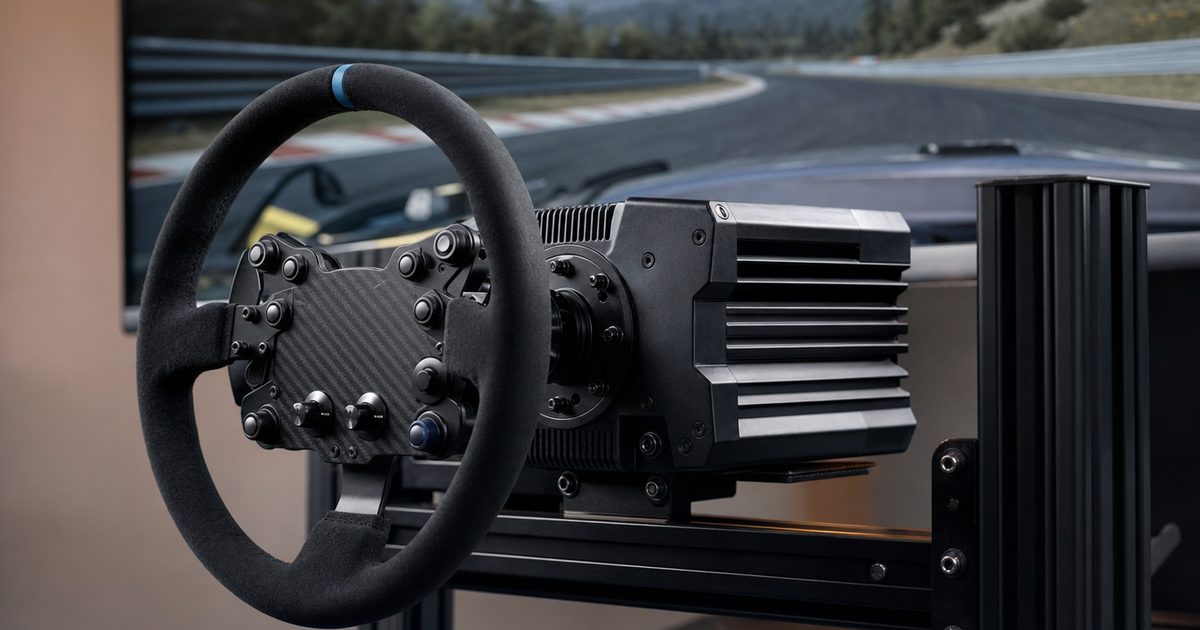
The best wheelbase is the one that makes a corner feel real and that you buy once. For most racers that means a direct-drive base with the Nm torque matched to your discipline and rig — not the most torque you can afford. This guide explains the specs that decide the fit — torque (Nm), drive type, protocol/ecosystem, max wheel weight and quick-release — then matches them to five categories: best overall, best budget direct drive, best mid-Nm, best high-Nm and best ecosystem all-rounder. Verified picks appear in each slot once real product data is in.
A note on how to read this. There is no single "best" wheelbase for everyone — the right one depends on your discipline, the rig you can mount it on, the ecosystem you are willing to commit to, and your budget. So the value here is the framework: what each spec changes, so you can shortlist a base that matches your situation. Read the framework first, then look at the picks. My own first wheel was the opposite of this approach — the cheapest gear-driven set I could find, which clipped constantly, felt mushy and vague, and nearly made me quit sim racing inside a week. I only came back after a league mate let me drive his direct-drive rig, and it finally felt real. That is the whole reason this guide leads with torque and drive type instead of button count: those two figures are what separate a base you keep from one you replace.
Specs verified against manufacturer details and current Amazon listings — no hands-on testing claims. Torque (Nm), drive type, protocol/ecosystem compatibility and quick-release fit are drawn from published manufacturer specs.
How to choose a sim racing wheelbase
A handful of specs decide whether a base suits you. These are exactly the columns in the comparison below.
Torque (Nm) — the number that matters most
Torque is the force the base pushes back through the rim, measured in newton-metres (Nm), and it is what turns raw sim data into a sensation you can drive by. It sets how clearly you feel the front tyres start to slide, the kerb under a wheel, the weight transfer through a fast change of direction. The bands break down roughly as entry (5–8 Nm), mid (8–12 Nm) and high (18+ Nm), and each suits a different driver and rig. Spec-by-spec, an 8 Nm direct-drive base resolves detail a 5 Nm belt base simply cannot, while the jump from 12 to 21 Nm buys headroom most drivers never fully use.
The trap is treating more Nm as automatically better. High torque only helps if your discipline asks for it and your frame is stiff enough to deliver it without flexing — a 21 Nm base bolted to a thin desk just shakes the desk, and the feel gets worse, not better. So the honest question is not "how much torque can I afford" but "how much torque can my rig and my driving actually use". The Torque Matcher turns your discipline, mount and budget into a recommended band, which is the fastest way to avoid both under- and over-buying.
Drive type — direct drive, belt or gear
Drive type is how the motor's force reaches the rim, and it is the spec that decides whether a wheel feels real or notchy. Direct drive bolts the rim straight to the motor shaft, so every bit of detail arrives clean, strong and notch-free. Belt drive runs the motor through a belt that smooths the output but absorbs fine detail along the way — better than gear, softer than direct drive. Gear drive is the cheapest and the notchiest: it is the drive type behind the "clips and feels mushy" first-wheel experience that pushes so many beginners to quit.
For nearly every buyer in 2026 the answer is direct drive, because entry direct-drive bases have closed the price gap that used to make belt and gear the default starter choice. The cost is a higher entry price and a base that wants a sturdier mount, but the payoff is feedback that does not hold you back as you improve. The wheelbases hub walks the differences in plain English if you want the longer comparison.
Protocol and ecosystem — the spec that commits your budget
The base's protocol and brand ecosystem — Fanatec, Moza, Logitech or Thrustmaster — decide which rims and quick-release systems will fit it. Parts rarely cross between brands without adapters, so this is the spec that quietly commits the rest of your spend: choose a base, and you have largely chosen the rim catalogue, the quick-release standard and often the shifter and handbrake you can add later.
That makes ecosystem the most expensive thing to get wrong, because the cost lands later, when you go to add a second rim and discover it only fits a different base. The fix is simple but easy to skip: pick the ecosystem deliberately, before the base, by looking at the rims and accessories you will want over the next year — not just the base price today. Buying the right ecosystem once is most of what "buy the right wheelbase once" actually means.
Max wheel weight and quick-release
Two smaller specs round out the fit. The base's rated max wheel weight tells you which heavier formula and GT rims it can drive cleanly without straining the motor — a light entry base paired with a heavy carbon formula rim can feel sluggish, while a stronger base swings the same rim easily. The quick-release (QR) standard, meanwhile, tells you which rims will physically mount at all, since QR is tied to the ecosystem above.
In practice you settle these by matching them to the rim you actually want rather than the other way round. If a particular GT or formula rim is on your list, confirm both that the base is rated to drive its weight and that its QR fits before you commit to the base. Getting this order right is how you avoid a base that technically works but never quite drives the rim you bought it for.
The wheelbases compared
A short list of widely available direct-drive wheelbases, compared on the specs above. Specs are verified against manufacturer details and current Amazon listings — no hands-on testing claims.
| Best for | Torque (Nm) | Drive type | Protocol | Quick release | Price-tier |
|---|---|---|---|---|---|
| Best overall | 9 Nm | Direct drive | USB, SimHub compatible | MOZA QR | Mid-range |
| Best budget direct drive | 3.9 Nm | Direct drive | USB | MOZA QR | Budget entry (complete bundle) |
| Best mid-Nm (8–12 Nm) | 10 Nm | Direct drive | USB | Simagic QR | Mid-range |
| Best high-Nm (18+ Nm) | 18 Nm | Direct drive | USB | Asetek QR | Premium |
| Best ecosystem all-rounder | 5.5 Nm | Direct drive | USB | MOZA QR | Entry-mid (all-in-one kit) |
Our top picks
Best overall: MOZA R9 V3 Direct Drive Wheelbase 9Nm FFB Force Feedback with NexGen 4.0 Force Feedback Algorithm with Enhanced Dynamic Feedback,Smart Temperature Control System

Best overall
MOZA R9 V3 Direct Drive Wheelbase 9Nm FFB Force Feedback with NexGen 4.0 Force Feedback Algorithm with Enhanced Dynamic Feedback,Smart Temperature Control System
MOZA
- Torque (Nm): 9 Nm
- Drive type: Direct drive
- Protocol: USB, SimHub compatible
- Max wheel weight: Not listed
- Quick release: MOZA QR
- Price-tier: Mid-range
The MOZA R9 V3 delivers 9 Nm of direct drive force feedback with MOZA's NexGen 4.0 algorithm, offering a sweet-spot between budget and premium DD performance.
Last checked 2026-06-14
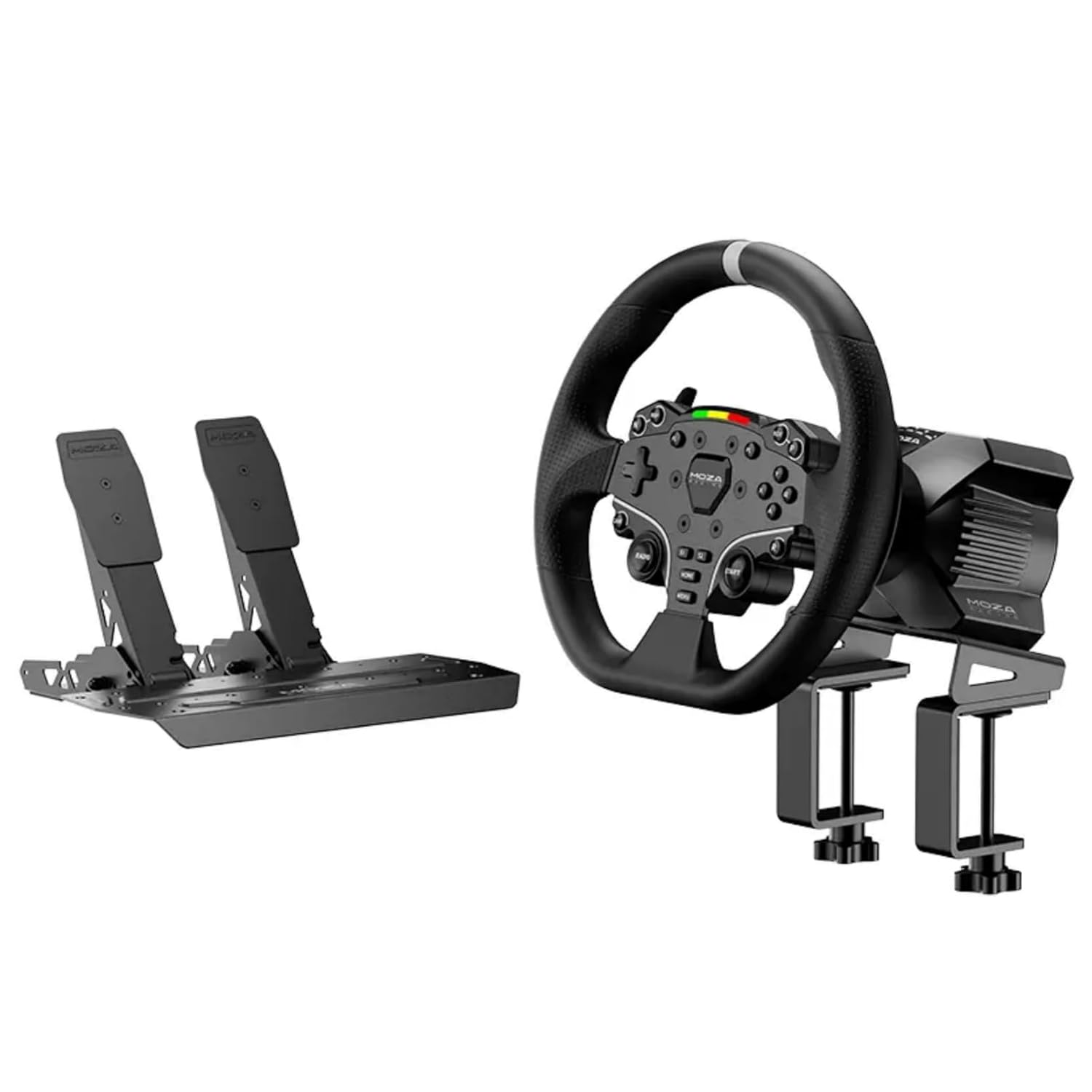
Best budget direct drive: MOZA R3 Racing Wheel and Pedals Bundle for PC, 3.9Nm Direct Drive WheelBase,11-inch ES Lite Steering Wheel,Pedals and Desk Clamp High-Performance Game Racing Simulator for PC User
Best budget direct drive
MOZA R3 Racing Wheel and Pedals Bundle for PC, 3.9Nm Direct Drive WheelBase,11-inch ES Lite Steering Wheel,Pedals and Desk Clamp High-Performance Game Racing Simulator for PC User
MOZA
- Torque (Nm): 3.9 Nm
- Drive type: Direct drive
- Protocol: USB
- Max wheel weight: Not listed
- Quick release: MOZA QR
- Price-tier: Budget entry (complete bundle)
MOZA's R3 bundle delivers a 3.9 Nm direct drive base, ES Lite wheel, pedals, and desk clamp in one box — the most affordable path to DD sim racing on PC.
Last checked 2026-06-14
Best mid-Nm (8–12 Nm): Mini Alpha Wheel Base by Simagic

Best mid-Nm (8–12 Nm)
Mini Alpha Wheel Base by Simagic
Simagic
- Torque (Nm): 10 Nm
- Drive type: Direct drive
- Protocol: USB
- Max wheel weight: Not listed
- Quick release: Simagic QR
- Price-tier: Mid-range
Simagic's Alpha Mini packs 10 Nm of direct drive force feedback into a compact form factor, sitting squarely in the 8–12 Nm sweet spot for serious hobbyists.
Last checked 2026-06-14
Best high-Nm (18+ Nm): ASETEK Forte Direct Drive Wheelbase 18Nm | Powerful Sim Racing Wheel base with Precise Force Feedback and Advanced Technology for Realistic Driving | Sim Racing Steering System for PC

Best high-Nm (18+ Nm)
ASETEK Forte Direct Drive Wheelbase 18Nm | Powerful Sim Racing Wheel base with Precise Force Feedback and Advanced Technology for Realistic Driving | Sim Racing Steering System for PC
ASETEK
- Torque (Nm): 18 Nm
- Drive type: Direct drive
- Protocol: USB
- Max wheel weight: Not listed
- Quick release: Asetek QR
- Price-tier: Premium
ASETEK's Forte delivers 18 Nm of direct drive force feedback with precision engineering aimed at enthusiast and semi-professional sim racers.
Last checked 2026-06-14
Best ecosystem all-rounder: MOZA R5 Wheel and Pedals Kit Racing Simulator 5.5Nm Direct Drive Wheelbase,Unbeatable Rigid & Durable 11-Inch ES Racing Wheel SR-P Lite Dual Pedal and Desk Clamp All-in-One

Best ecosystem all-rounder
MOZA R5 Wheel and Pedals Kit Racing Simulator 5.5Nm Direct Drive Wheelbase,Unbeatable Rigid & Durable 11-Inch ES Racing Wheel SR-P Lite Dual Pedal and Desk Clamp All-in-One
MOZA
- Torque (Nm): 5.5 Nm
- Drive type: Direct drive
- Protocol: USB
- Max wheel weight: Not listed
- Quick release: MOZA QR
- Price-tier: Entry-mid (all-in-one kit)
MOZA's R5 kit bundles a 5.5 Nm DD base, ES Racing Wheel, SR-P Lite dual pedals, and desk clamp — the complete MOZA ecosystem in one purchase for PC sim racing.
Last checked 2026-06-14
Who should buy what
The first-time direct-drive buyer — entry torque, deliberate ecosystem
If this is your first move into direct drive, the best overall and best budget direct drive slots point the same way: an entry base in the 5–8 Nm band, on an ecosystem you have chosen on purpose. Spec-by-spec, an entry direct-drive base gives you clean, notch-free feedback that a belt or gear wheel never will, at a price that has fallen close enough to make the upgrade worth it from the start. The Moza R5 is the bang-for-buck anchor here for exactly that reason.
The honest trade-off is headroom: an entry base will not deliver the raw force a high-Nm unit can, so if you already know you want heavy formula feel on a rigid rig, you may outgrow it. For most first builds that is not the constraint that bites — ecosystem choice is. Pick the brand whose rims and pedals you will want over the next year, and an entry base becomes a base you keep driving rather than one you replace in a season.
The all-round GT and road racer — mid-Nm on a cockpit
The best mid-Nm (8–12 Nm) slot is the popular sweet spot, and for good reason. Spec-by-spec, a mid-Nm base resolves the front-end detail a GT or road car lives on — where the grip starts to go, how the kerbs load up — without the brute force that only a fully rigid rig can put to use. On a cockpit or a sturdy stand it is the band most league racers settle on and rarely feel the need to leave.
The trade-off is that a mid-Nm base genuinely wants a frame that does not flex, so it pairs with a cockpit or solid stand rather than a thin desk. Get that pairing right and the mid band gives you almost all the feel of a high-Nm setup for less money and less rig — which is why it routes so much of the all-rounder traffic on this page.
The experienced driver chasing maximum feel — high-Nm on a rigid rig
The best high-Nm (18+ Nm) slot suits a specific buyer: an experienced racer on a fully rigid aluminium-profile rig who wants every bit of force the discipline can use — heavy formula cars, long stints, the last few percent of feel. Spec-by-spec, a high-Nm base delivers headroom a mid base cannot, and on the right frame that headroom turns into sharper, more physical feedback.
The trade-off is real and worth being clear-eyed about: high torque is wasted, or worse, on a frame that flexes, and it asks more of your arms over a race distance. If your rig is not stiff and your discipline does not demand it, the extra Nm buys nothing the mid band did not already give you. This is the slot you grow into deliberately, not the one you start on.
The buyer who wants to stay flexible — the ecosystem all-rounder
The best ecosystem all-rounder slot is for the racer who cares as much about what comes next as about the base itself. The figure that matters here is not peak Nm but how deep and cross-compatible the ecosystem is: how many rims, pedals, shifters and handbrakes share the same quick-release and protocol, so your future cart-stack stays open rather than locked to a single product.
The trade-off is that the broadest ecosystem is not always the one with the single cheapest base, so you may pay a little more up front to keep your options open later. For a buyer who expects to add a second rim, move to load-cell pedals and eventually upgrade the cockpit, that is usually the cheaper path overall — it is the practical version of buying the right wheelbase once.
What to buy alongside the wheelbase
A base is the start of a natural cart-stack. Next comes a rim that matches its quick-release, then load-cell pedals that fix braking before any extra Nm does, and a cockpit or stand rigid enough to hold the torque. Not sure on the Nm? Run the Torque Matcher.
Frequently asked questions
What is the best sim racing wheelbase overall?
For most racers, a mid-Nm direct-drive base (8–12 Nm) on a cockpit is the sweet spot — enough force for detailed feedback without overwhelming the rig. Newcomers and desk setups are better served by an entry direct-drive base in the 5–8 Nm range, where the Moza R5 sits as the bang-for-buck anchor that put real direct-drive force within reach of a first build. Verified picks land on this page once real product data is in.
How much torque (Nm) do I need in a wheelbase?
Entry (5–8 Nm) suits beginners and desk clamps. Mid (8–12 Nm) is the popular all-round band for GT and road racing on a cockpit. High (18+ Nm) is for experienced drivers on a rigid rig. Spec-by-spec, more Nm only helps if your discipline and frame can use it: an 8 Nm base already delivers feedback most drivers never max out, while a 21 Nm base on a flexing desk just shakes the desk. Run the Torque Matcher to turn your discipline, rig and budget into a band.
Direct drive, belt or gear — which should I buy?
Direct drive, if your budget reaches it. It bolts the wheel straight to the motor for strong, detailed, notch-free feedback. Belt is a smoother step up from gear but softer than direct drive, because the belt absorbs fine detail before it reaches your hands. Gear is the cheapest and the notchiest — the drive type that clips and feels mushy. Entry direct-drive bases have closed the price gap enough that most buyers should aim there rather than buy a belt or gear wheel they outgrow in a season.
Does the wheelbase lock me into one brand?
Largely, yes. Rims and quick-release systems are tied to the base’s ecosystem — Fanatec, Moza, Logitech or Thrustmaster — and parts rarely cross between brands without adapters. Choosing your ecosystem before you buy the base is how you avoid buying rims and accessories twice. It is the trade-off the spec sheet never shows you, and the one that costs the most when you get it wrong.
Will a direct-drive wheelbase fit my desk?
Entry-Nm bases clamp to a sturdy desk fine. Higher-torque bases can flex or damage a thin desk, and the wobble ruins the feel before the torque ever helps. The Direct-Drive Torque Matcher flags when your mount can't safely hold the torque you want — pointing you to a stand or rig instead, which is the most common upgrade buyers overlook.
Is the Moza R5 a good first wheelbase?
Spec-by-spec, the Moza R5 sits in the entry direct-drive band (around 5.5 Nm) on the Moza ecosystem, which is why it routes so much first-base traffic: it puts notch-free direct-drive feedback within reach of a starter budget and clamps to a sturdy desk. The trade-off is the ecosystem commitment — once you buy into a Moza base, the rim and quick-release you add later are Moza too. If that ecosystem suits your plans, an entry base like the R5 is a sensible first step up from a gear or belt wheel.
How long should a direct-drive wheelbase last?
Direct-drive bases have fewer wear parts than belt or gear units — there is no belt to stretch or gears to develop notchiness — so the motor itself tends to outlast several rim and pedal upgrades. The figure that dates a base is not durability but torque headroom: buyers more often replace a base because they want a higher Nm band or a different ecosystem than because the unit failed. Buying the right band and ecosystem once is how you avoid that second purchase.