Sim Racing Wheelbases
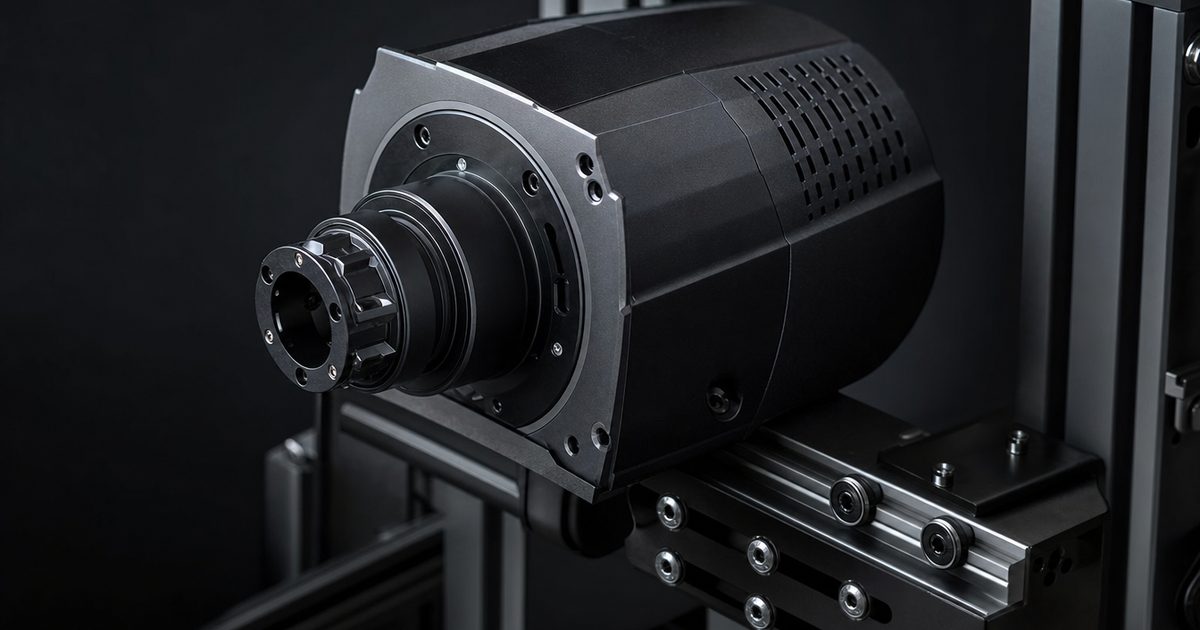
The wheelbase is the heart of the rig — it decides how the car feels in your hands, and it is the decision people overthink most. This silo compares the drive types (direct drive, belt and gear), sorts out the Nm torque tiers by discipline, names the brand ecosystems, and lays out the lock-in trap that costs beginners twice. Specs are verified against manufacturer and current Amazon listings; no hands-on testing is claimed.
Torque first, buttons last
Before you compare brands, settle the spec that decides everything else: torque, measured in newton-metres (Nm). It's the force the base can push back through the rim — the thing that turns the sim's data into weight, grip and the moment the rear lets go. A fancy rim with a dozen buttons is convenience; torque and drive type are the actual experience. The single most-asked beginner question is "how many Nm do I need," and the honest answer is "the lowest band that still feels detailed for your discipline, on a rig that can hold it." The best sim racing wheelbase pillar makes that case in full, and the Direct-Drive Torque Matcher turns it into a recommended band for your setup.
Direct drive vs belt vs gear
Drive type matters more than the raw Nm number, because it decides how cleanly that force arrives. There are three families, and the gap between them is wider than any spec sheet makes it look.
Gear-driven — cheap, notchy, and prone to clipping
Gear-driven wheels turn a weak motor through plastic gears. They fill the budget shelf, but the gears add notchiness and the motor is feeble enough that the force feedback clips constantly — strong effects max out and flatten into the same dull buzz, so you lose the detail you're trying to feel. A gear-driven wheel isn't a smaller version of a good base; it's a different, worse experience, and it's the category that makes beginners quit.
Belt-driven — smoother, but a shrinking middle
Belt-driven bases route the motor's force through a pulley, smoothing the gear notchiness for a more refined feel. For years this was the sensible mid-tier. But as entry direct-drive prices have fallen, the case for buying new belt-driven has narrowed — similar money often buys a real direct-drive base with more detail and headroom.
Direct drive — the wheel bolted straight to the motor
Direct drive mounts the wheel straight onto the motor shaft, with no gears or belt in between. The feedback is strong, fast and detailed, free of notchiness, with the headroom to render small effects without clipping. The Moza R5 is the entry-direct-drive anchor most beginners land on, because it brought genuine direct-drive feel to a first-base budget. Brands like Simagic (the Alpha and Alpha Mini), Simucube (the 2 Pro and Ultimate) and Asetek (Forte and Invicta) push the higher end. For most sim racers, stepping up to direct drive is the change that finally makes a car feel like it has weight.
The Nm torque tiers, by discipline
Once you've settled on direct drive, the Nm band is where discipline comes in. Different racing wants different force, and the rig under the base has to match.
- Entry (5–8 Nm). The right band for most first bases, especially on a desk — enough to feel real detail without fighting the wheel or flexing the setup. Plenty for GT, road and casual oval. This is where the Moza R5 lives.
- Mid (8–12 Nm). The popular all-round band once you've moved to a cockpit. Adds headroom for stronger effects and finer detail; suits serious GT, road and endurance racing.
- High (18+ Nm). For experienced drivers on a rigid aluminium-profile rig who want maximum force — often formula and high-downforce content. It needs a stiff cockpit to be usable, and it's more than most first-timers should buy.
Discipline is the tie-breaker: GT and road are well served by entry-to-mid; formula drivers tend to want the higher bands; rally and drift reward fast, communicative feedback more than raw strength; and oval is steadier on peak torque. Rather than guess, feed your discipline, rig and budget into the Direct-Drive Torque Matcher and let it return a band.
Ecosystem and the lock-in trap
Fanatec, Moza, Logitech and Thrustmaster each run their own ecosystem of bases, rims and quick-release (QR). Parts rarely cross between brands — a rim built for one base often won't mount another without an adapter, if at all — so the base you pick largely commits you to that brand's rims and accessories for years. That's not a reason to panic; every major ecosystem makes good gear. It's a reason to choose deliberately, by the rims and pedals you'll eventually want, before you buy the base. The mistake is backing into an ecosystem because one base was on sale, then paying twice to leave it. The sim racing wheels & rims hub explains which rim mounts which base and how QR compatibility really works.
Desk-clamp vs cockpit mounting
A direct-drive base doesn't just spin the wheel — it pushes back hard, and all that force goes somewhere. For an entry-Nm base on a sturdy desk, a desk clamp is genuinely fine. The catch is desk thickness: a thin or wobbly desk flexes under torque, you feel the desk instead of the road, and the detail you paid for drains away. As you climb the Nm tiers, that flex becomes a real problem and the base outruns the desk — which is when a wheel stand or a rigid cockpit earns its place. Rigidity should scale with torque. Settle the cockpit or stand to match the band you want — the Torque Matcher flags when your mount can't safely hold the Nm you want, and the Rig-Fit Calculator sizes the cockpit to your height and room.
Featured guides
The current published guides in this silo. More land each batch.
Landing next: Moza R5 specs, Moza R9 vs R12, Simagic Alpha Mini specs, Simucube 2 Pro specs, best budget direct-drive wheelbase, and Fanatec CSL DD specs.
Frequently asked questions
What is the difference between a direct-drive and a belt-driven wheelbase?
A direct-drive base bolts the wheel straight onto the motor, so the force feedback is strong, detailed and free of notchiness. A belt-driven base routes the force through a pulley, which is smoother than gear but softer and less detailed than direct drive. Direct drive is the upgrade most sim racers feel immediately.
How much torque (Nm) does a sim racing wheelbase need?
Entry direct-drive (5–8 Nm) suits newcomers and desk setups. Mid (8–12 Nm) is the popular all-round band for GT and road racing on a cockpit. High (18+ Nm) is for experienced drivers on a rigid rig. More Nm is not always better — it has to match your discipline, your rig and your hands.
What is wheelbase ecosystem lock-in?
Wheelbases, rims and quick-release systems are tied to a brand — Fanatec, Moza, Logitech or Thrustmaster — and parts rarely cross between them. Once you pick a base you are largely committed to that brand’s rims and accessories, so choosing the ecosystem before you buy is how you avoid paying twice.
Can I clamp a direct-drive wheelbase to a desk?
Entry-Nm bases clamp fine to a sturdy desk. Higher-torque bases generate enough force to flex or damage a thin desk and introduce wobble that ruins the feel. The Direct-Drive Torque Matcher flags when your mount can't safely hold the torque you want and points you to a stand or rig if needed.