Sim Racing Wheels & Rims
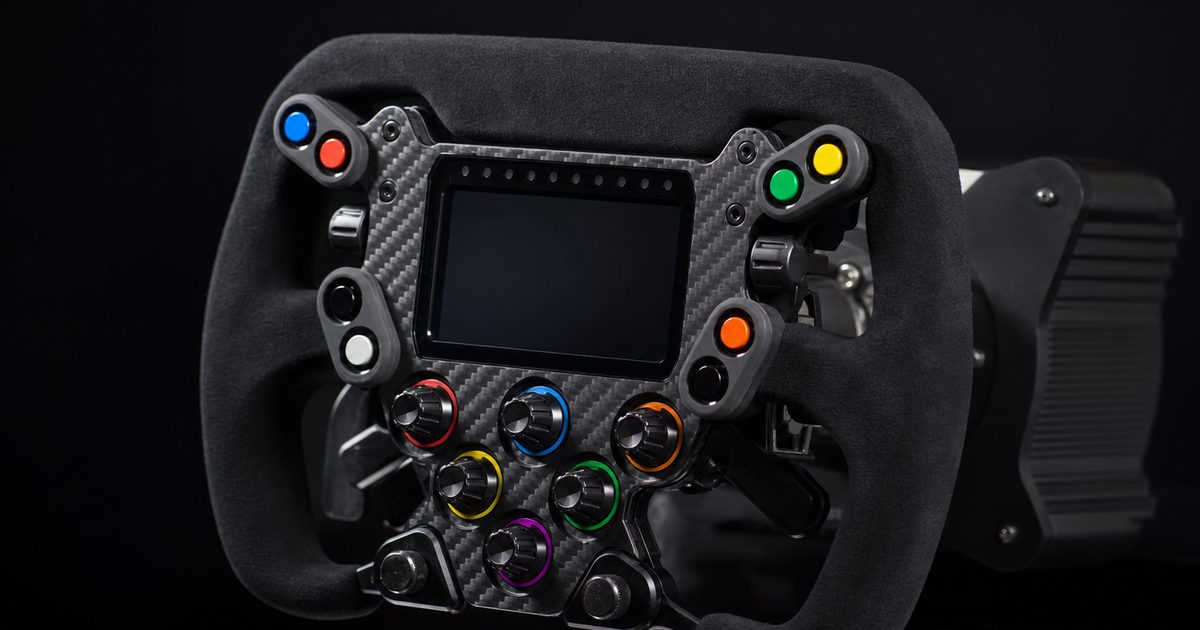
The rim is the part you actually hold, and the part that turns one base into many cars. This silo compares the rim types — GT, formula and rally — sorts out button-box and display, and explains the quick-release (QR) compatibility that decides which rim mounts which base. Specs are verified against manufacturer and current Amazon listings; no hands-on testing is claimed.
The rim is bought to match the base
Start here, because it saves the most pain: a rim is chosen after the wheelbase, to fit it. The base and rim talk through a quick-release (QR) that is usually proprietary to the brand, so the base you picked in the best sim racing wheelbase guide largely decides the rims you can run. Settle the base first, confirm its ecosystem, and then — and only then — shop rims that mount it. Buying a rim you love before checking it fits your base is one of the most common and avoidable first-rig mistakes.
GT vs formula vs rally rims
Rim shape follows the cars you drive. There are three families a beginner will meet.
GT rim — the round all-rounder, and the right first rim
A GT rim is a round wheel sized roughly like a real GT car's, suited to GT, road and touring content. It's the natural first rim because it suits the widest range of cars, and it's comfortable for long stints. Most racers start here and add a second rim later. Sizes typically run 28–33 cm, with leather or Alcantara-style grips.
Formula rim — flat-bottomed, button-heavy, display-ready
A formula rim is a smaller, flat-bottomed, open-wheel-style rim packed with buttons, rotary encoders and often a built-in display. It suits single-seaters and anyone who wants every control on the wheel. It's less comfortable for road cars but unbeatable for F1-style racing where you're changing brake bias and energy maps mid-lap.
Rally rim — round, suede, fast hands
A rally rim is a round, usually suede-wrapped wheel built for rally and drift, where you're moving your hands quickly and want grip and a slightly larger diameter. Boutique brands like Simagic and Ascher Racing make well-regarded rims across these categories, often with cross-ecosystem QR options.
Button-box and display
Buttons, encoders and a built-in display are conveniences layered on top of the rim, not the thing that decides whether it's good. A display shows speed, gear, lap delta and shift lights without a separate dash, which suits formula rims; plenty of racers run a simpler GT rim with a phone or tablet dash app instead and spend the saved money elsewhere in the cart-stack. Count the buttons and encoders you'll genuinely use — sim titles map a lot to the wheel, but you don't need forty controls to start. Buy the display if you want it; just don't let it be the only thing driving the rim choice.
Quick-release compatibility
The quick-release (QR) is the coupling that lets you pull one rim off and click another on in seconds, so a single base can run a GT rim for endurance and a formula rim for single-seaters. The catch is that QR standards are usually tied to the base's ecosystem — Fanatec, Moza, Logitech or Thrustmaster — so a rim from one brand often won't mount another brand's base without an adapter. Some third-party rims ship with a choice of QR to fit multiple ecosystems, which is one way around lock-in. Checking QR compatibility before you buy any rim is the single most important step in this silo; the sim racing wheelbases hub covers how ecosystem lock-in works upstream.
Featured guides
The current published guides in this silo. More land each batch.
Landing next: GT vs formula rim, quick-release compatibility guide, Simagic steering wheel specs, Ascher Racing wheel specs, best formula rim, and best GT rim.
Frequently asked questions
What is the difference between a GT, formula and rally rim?
A GT rim is a round wheel suited to GT and road cars. A formula rim is a flat-bottomed, open-wheel-style rim packed with buttons and often a display, suited to single-seaters. A rally rim is a round, often suede wheel for rally and drift. Most racers start with a GT rim because it suits the widest range of cars.
Will any rim fit my wheelbase?
Not necessarily. Rims attach via a quick-release (QR) that is usually tied to the base’s ecosystem — Fanatec, Moza, Logitech or Thrustmaster — so a rim from one brand often will not mount another brand’s base without an adapter. Always check QR compatibility before buying a rim.
Do I need a rim with a built-in display?
A display is a convenience, not a requirement. It shows speed, gear, lap delta and shift lights without a separate dash, which is handy on formula rims. Many racers run a simpler GT rim and a phone or tablet dash instead. Buy the display if you want it, but it should not drive the rim choice alone.
What is a quick-release on a sim racing wheel?
A quick-release (QR) is the coupling that lets you swap rims on and off the wheelbase in seconds, so you can run a GT rim for one car and a formula rim for another on the same base. QR standards differ by brand, which is the main thing that limits cross-ecosystem rim swapping.