Sim Racing Pedals
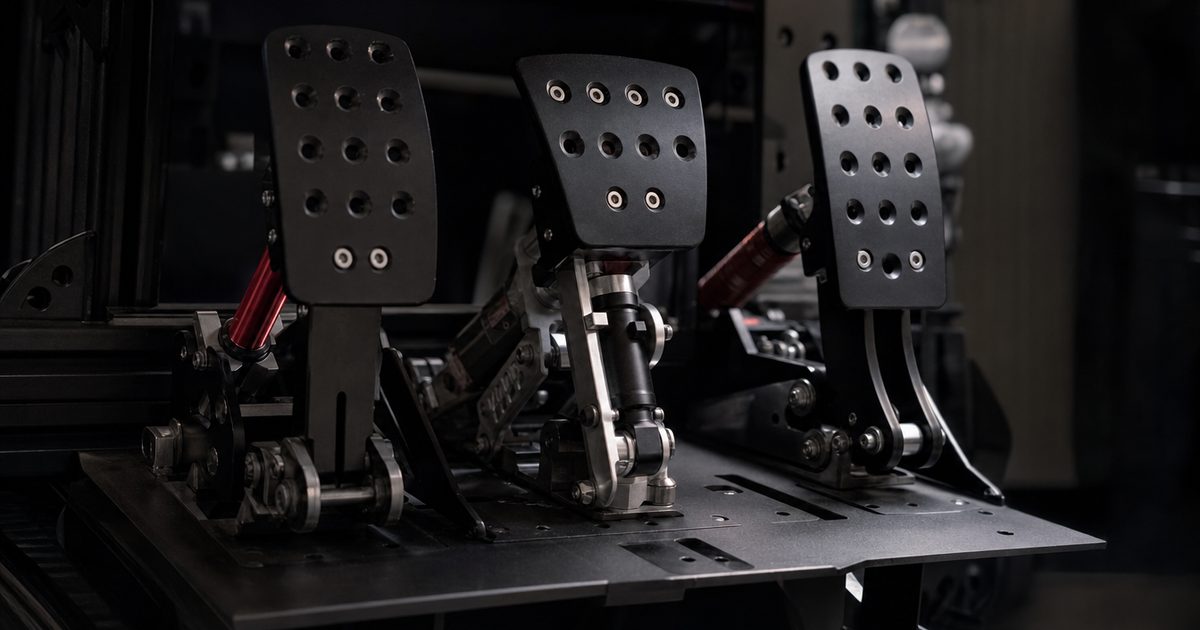
Pedals are the most underrated upgrade in sim racing — braking is where lap time is won, and braking lives in the pedals. This silo compares load-cell vs potentiometer, 2 vs 3 pedal sets, brake-force (kg) tuning and hydraulic, and makes the case for why pedals fix your braking before a new wheelbase ever will. Specs are verified against manufacturer and current Amazon listings; no hands-on testing is claimed.
Why pedals matter as much as the base
Here's the sentence that reorders most first-rig budgets: you feel pedals before you feel the last few Nm of torque. Braking is where most lap time is found, and braking happens at the pedals, not the wheel. After the wheelbase itself, a load-cell brake is the upgrade most sim racers notice first — and for many people building a first rig it does more for lap time and immersion than another 4 Nm at the wheel ever would. If you have to choose between a stronger base and a load-cell brake on a modest base, the brake usually wins.
Load-cell vs potentiometer
The difference is how the brake reads your foot. A potentiometer pedal measures travel — how far the pedal moves — so braking depends on hitting the same position every time, which is hard and inconsistent. A load-cell pedal measures pressure — how hard you push — which is exactly how a real brake works. The result is a consistent force reference you can hit lap after lap: you stop locking up because you pushed a millimetre too far, and you start braking by feel. Throttle and clutch generally don't need a load cell; the brake is where it counts. If you upgrade one thing after the base, make it a load-cell brake. Brands like Heusinkveld (the Sprint set) anchor the higher end of this category.
2 vs 3 pedals
Two pedals — throttle and brake — cover most modern racing, where cars are paddle-shift and need no clutch foot. That's the bulk of GT, formula and modern road content, so a quality two-pedal load-cell set is a complete starting point. A third pedal adds a clutch, which matters for manual H-pattern cars, clean race starts, and some rally and classic content. The honest rule: if you mainly race GT and formula, two is plenty; add the third pedal when you actually want manual cars in the mix, since many sets let you add it later.
Brake-force tuning and hydraulic
Load-cell brakes are rated by the maximum force they read, often in kilograms, and most let you tune how much pressure equals full braking. That tuning is the point: set the brake force to your leg strength and seating position and the brake feels natural and repeatable rather than too light or impossibly stiff. Hydraulic pedals take feel further with a fluid damper that more closely mimics a real brake's progressive resistance — the premium end of pedal feel, and worth it once braking has become the thing you obsess over. Brake-force adjustment, elastomer or spring kits, and pedal-face position all combine into a brake you can trust under pressure.
Featured guides
The current published guides in this silo. More land each batch.
Landing next: load-cell vs potentiometer pedals, Heusinkveld Sprint specs, hydraulic sim pedals guide, best budget load-cell pedals, 2 vs 3 pedal sets, and brake-force tuning guide.
Frequently asked questions
What is the difference between load-cell and potentiometer pedals?
Potentiometer pedals measure how far the pedal travels; load-cell pedals measure how hard you press. Real brakes respond to pressure, not distance, so a load-cell brake gives far more consistent, repeatable braking — it is the single upgrade most sim racers notice first. Load-cell is worth prioritising over more wheelbase torque.
Do I need 2 or 3 pedals?
Two pedals (throttle and brake) cover most modern racing, where cars are paddle-shift and need no clutch. Three pedals add a clutch, which matters for manual H-pattern cars, race starts and some rally and classic content. If you mainly race GT and formula, two is enough; add the third if you want manual cars.
Why are pedals more important than wheelbase torque?
Braking is where most lap time is won or lost, and braking lives in the pedals. A load-cell brake gives you a consistent pressure reference you can hit lap after lap, which fixes braking inconsistency before any extra Nm at the wheel does. You feel pedals before you feel the last few Nm of torque.
What is brake-force (kg) tuning?
Load-cell brakes are rated by the maximum force they read, often in kilograms, and most let you tune how much pressure equals full braking. Setting the brake force to suit your leg strength and seating position is what makes the brake feel natural and repeatable, rather than too light or impossibly heavy.