Sim Racing Cockpits & Accessories
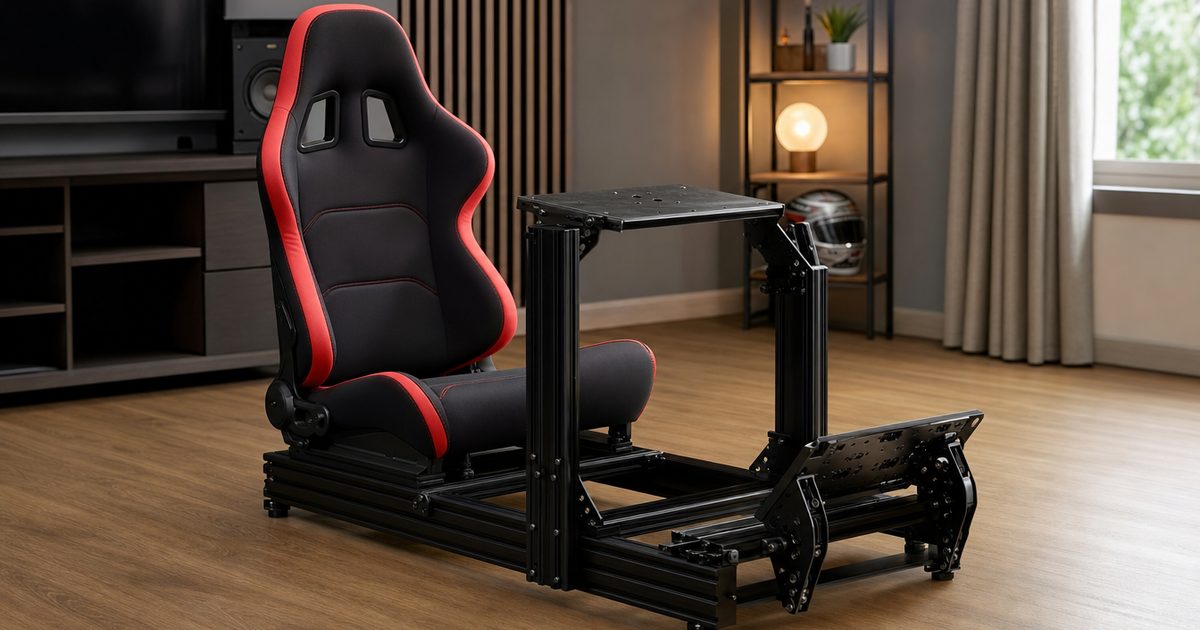
A rig is only as good as the frame holding it — flex ruins more force feedback than low torque does. This silo compares cockpits, stands, shifters, handbrakes and mounts: foldable cockpit vs aluminium-profile chassis vs wheel stand, rigidity vs desk space, and where everything bolts on. This silo also owns the Tools area. Specs are verified against manufacturer and current Amazon listings; no hands-on testing is claimed.
Rigidity is the spec that matters
Before you compare frame types, understand what the frame is actually for. A direct-drive base pushes back hard, and every bit of that force has to be absorbed by the rig. If the frame flexes, you feel the frame twisting instead of the road — the detail you paid for in the wheelbase and pedals drains straight out. So the spec that matters in a cockpit isn't comfort or looks; it's rigidity under load, and rigidity should scale with your wheelbase torque. A flimsy frame under a strong base is the single upgrade mistake people regret most.
Foldable vs aluminium-profile vs wheel stand
There are three frame families, and they trade rigidity against size, cost and storage.
Wheel stand — compact and affordable
A wheel stand holds just the wheel and pedals on an A-frame, with no seat — you pull your own chair up to it. It's the most compact and affordable option, folds down for storage, and is a fine match for an entry-Nm base in a tight space. Its limits are rigidity at higher torque and a shortage of mounting points for extras.
Foldable cockpit — a seat that folds away
A foldable cockpit adds a proper seat and a more complete frame, then folds flat when you're done — the sweet spot for people who want a real seated rig but can't leave it set up permanently. Rigidity sits between a stand and a full profile chassis, and it's comfortable enough for long stints. A strong pick for entry-to-mid torque in a shared room.
Aluminium-profile chassis — the stiffest, most adjustable rig
An aluminium-profile chassis is built from modular extrusion — the same kind of T-slot aluminium used in machine framing. It's the stiffest and most adjustable option, stays planted under heavy force, and bolts on shifters, handbrakes, monitor mounts and trays anywhere along the rail. It's also the biggest and priciest, and a permanent fixture. This is what high-Nm rigs all end up on, and what I run myself. Rigidity rises with size and cost, and the right pick depends on your space and your wheelbase torque.
Rigidity vs desk space
The practical question is how much rig your torque and your room can justify. Entry-Nm bases are happy on a sturdy stand or a foldable cockpit. As torque climbs into the mid and high tiers, flex becomes the enemy — a high-Nm base on a flimsy frame twists, and the road feel gets muddy. Match rigidity to torque: stand or foldable for entry, profile cockpit for mid and high. If space is the constraint, a foldable cockpit buys most of the rigidity without the permanent footprint. The Torque Matcher flags when a mount is under-built for the force you're running and points you up a tier, and the Rig-Fit Calculator sizes the cockpit type to your height and room.
Where shifters, handbrakes and trays mount
The accessories are part of the cockpit decision because they need somewhere solid to live. Shifters (sequential or H-pattern), handbrakes for rally and drift, and keyboard trays all bolt to the side or front of the rig, usually onto aluminium profile or a dedicated bracket. A wheel stand has limited mounting points; a profile chassis has many. Brands like Moza make matching shifters and handbrakes (such as the HBP handbrake) that bolt straight to a profile rig. The rule: if you plan to add a shifter or handbrake later, make sure the rig has somewhere solid to put it before you buy the frame — retrofitting mounts to a stand that wasn't built for them is a common frustration.
Featured guides
The current published guides in this silo. More land each batch.
Landing next: foldable vs aluminium-profile cockpit, best racing wheel stand, best sim racing shifter, sim racing chassis guide, Moza HBP handbrake specs, and best sequential shifter.
Frequently asked questions
What is the difference between a foldable cockpit, an aluminium-profile chassis and a wheel stand?
A wheel stand holds just the wheel and pedals and is the most compact and affordable. A foldable cockpit adds a seat but folds away for storage. An aluminium-profile chassis is a rigid, modular rig built from extrusion — the stiffest and most adjustable, but the biggest and priciest. Rigidity rises with size and cost.
Do I need a cockpit, or will a wheel stand do?
For entry-Nm bases and limited space, a sturdy wheel stand is fine. As torque rises, flex becomes the enemy — a high-Nm base on a flimsy stand twists and ruins the feel. An aluminium-profile cockpit stays planted under heavy force, which is why serious rigs move to profile chassis as torque climbs.
Where do shifters, handbrakes and keyboard trays mount?
They bolt to the side or front of a cockpit, usually on the same aluminium profile or a dedicated mount. A wheel stand has limited mounting points; a profile chassis has many. If you plan to add a shifter or handbrake later, check the rig has somewhere solid to put them before you buy.
How rigid does my rig need to be?
Rigidity should scale with your wheelbase torque. Entry torque is happy on a stand; mid and high torque want a profile cockpit so the force goes into the road feel, not into flexing the frame. A flimsy rig under a strong base is the upgrade mistake people regret most.