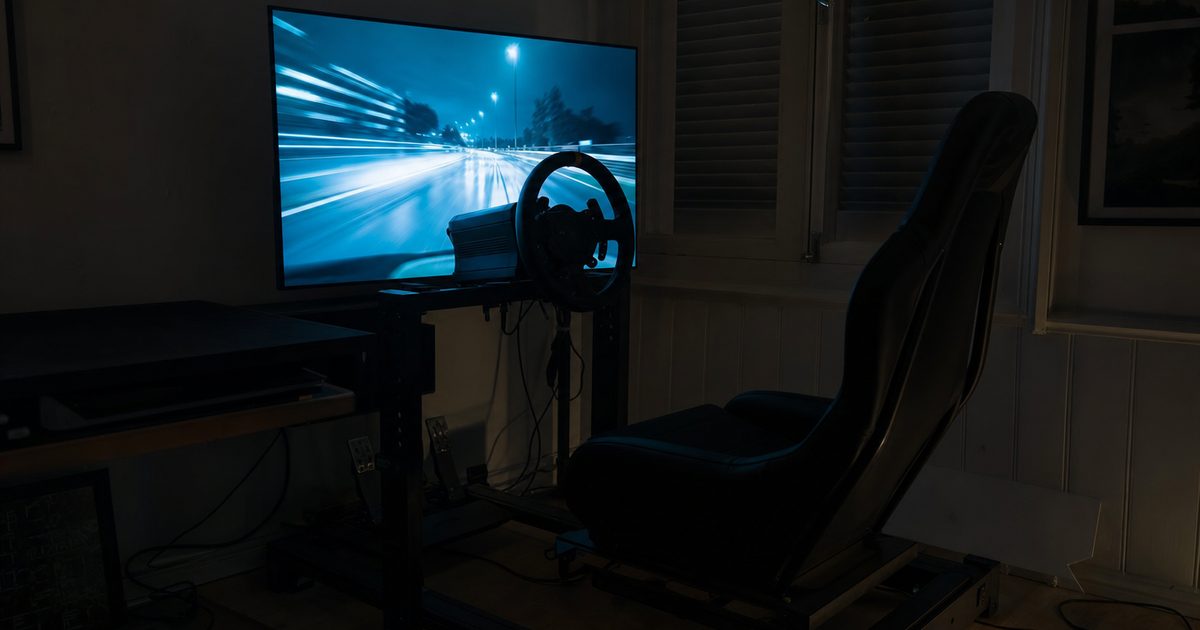
I almost quit sim racing in the first week. Not because I wasn’t into it — I was completely hooked on the idea — but because the first wheel I bought made the whole thing feel like a chore instead of a thrill. If you’re standing where I was, staring at a cart trying to figure out which wheel to start with, this is the post I wish someone had handed me.
The wheel I bought, and why
I started on a console with a controller, like a lot of people do. It was fine for what it was, but I wanted the real thing — the feel of a car loading up through a corner, the weight coming back through my hands. So I did what felt sensible at the time: I bought the cheapest gear-driven wheel I could find, told myself I’d upgrade “later if I stick with it,” and waited for it to arrive.
The logic seemed airtight. Don’t overspend on a hobby you might not keep. Buy entry-level, prove it to yourself, then commit. I’ve since learned that this exact reasoning is how a lot of people end up quitting — because the entry-level gear they buy to “test the waters” is so bad it convinces them the water’s cold.
What it actually felt like
Here’s the honest version. The force feedback was notchy — you could feel the gears chattering against each other, a kind of grainy resistance that had nothing to do with the road. When the car loaded up in a fast corner, the exact moment you most need information, the wheel would clip: the signal maxed out and just went flat, like a song peaking into distortion. No detail, no progression, just a wall of resistance and then nothing.
The on-centre feel was the worst part. Around the straight-ahead position the wheel felt mushy and vague, a dead zone where I couldn’t tell what the front tyres were doing. I’d turn in and the feedback would arrive late, exaggerated, then cut out. I kept overcorrecting because the wheel was lying to me about grip.
After a week I genuinely thought sim racing just wasn’t for me. I figured I’d bought into the hype and the real experience was this twitchy, plasticky, frustrating thing. I was ready to box it up.
The night that changed my mind
What saved it was a league mate who let me drive his rig — a direct-drive base with load-cell pedals. The motor in a direct-drive wheelbase connects straight to the wheel, no belts or gears in between, so what you feel is the actual force the sim is calculating. The first corner, the wheel went light as the front washed wide, then loaded back up smooth and linear as the tyres bit. I could feel the kerb. I could feel the rear stepping out before it actually let go.
It was the same sim, the same track. The difference was entirely the hardware between me and the car. That was the moment I understood what I’d actually bought the first time: not a cheaper version of the real thing, but a fundamentally different and worse experience that happened to look similar in photos.
What I wish I’d known
A few things I’d tattoo on my past self’s arm:
- Drive type matters more than the brand badge or the button count. A gear-driven wheel and a direct-drive wheelbase are not the same product at different price points. They feel different in kind, not degree. The buttons and the rim do not save a notchy gear drive.
- Clipping is the enemy, and cheap gear drives clip constantly. When the feedback maxes out and goes flat, you lose exactly the information you need at the limit. Entry direct-drive bases have far more headroom before they clip.
- You can start at the bottom of direct drive and be happy for years. I didn’t need 18 Nm. An entry direct-drive base in the 5–8 Nm range would have given me real, clean feedback from day one. The mistake wasn’t spending too little — it was buying the wrong type to spend a little.
- The “prove it first, upgrade later” plan often costs more. I paid for the cheap wheel, then paid again for the base I should have bought. Buy the right category once and you spend less overall.
So what would I tell a beginner now?
Skip the gear-driven wheel entirely. If your budget genuinely only stretches to a low-end gear wheel today, I’d rather you wait a couple of months and start on the bottom rung of direct drive than burn the money on something that might put you off the hobby for good. The whole reason this site exists is that I nearly quit over a purchase I made trying to be sensible.
If you want the breakdown of which base suits which discipline and budget, I put everything I’ve learned into the best sim racing wheelbase guide. Start there, pick the right type once, and you’ll skip the week that nearly ended this hobby for me.