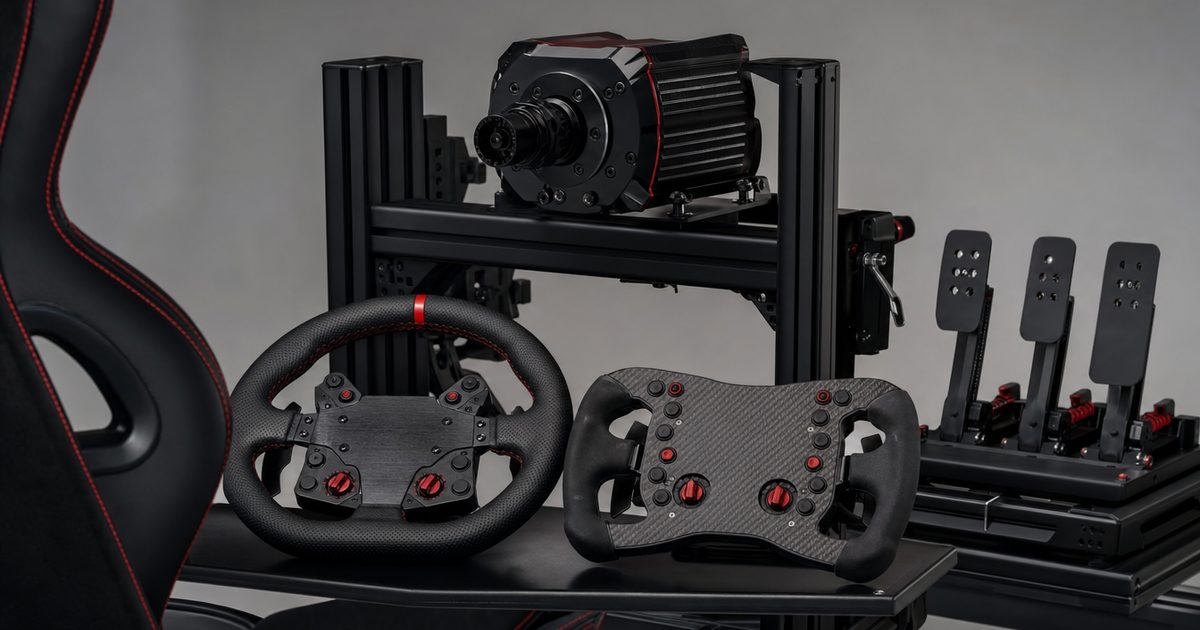
When you buy your first wheelbase you think you’re buying one thing. You’re actually choosing an ecosystem — a family of rims, quick-releases, pedals and accessories that mostly only play nicely with each other. Nobody told me this when I started, and it’s the second-biggest money trap in sim racing after buying a gear wheel. Here’s how it works and how to buy around it.
What “ecosystem” actually means
A wheelbase from one brand is designed to mate with that brand’s rims through that brand’s quick-release. Their pedals talk to their base over their protocol. Their button boxes, their dashes, their shifters — all built to slot together. Within an ecosystem, everything works. Across ecosystems, it’s a patchwork of adapters, compromises, and “well, mostly.”
The big names each have their own world: Fanatec, Moza, Logitech, Thrustmaster, and the higher-end players like Simagic, Simucube and Asetek. They are not designed to mix. A rim built for one base’s quick-release won’t simply click onto another’s. Some things cross over with adapters; plenty don’t, or do so awkwardly.
How the trap springs
Here’s the sequence that catches people. You buy an entry base from brand A because it’s the cheapest direct-drive option that month. You’re happy. A year later you want a nicer formula rim — and the one you want is brand B’s, because it’s the best for the money. Now you’re buying B’s quick-release adapter too, if one even exists, and hoping the button mapping works. Or you want to add a second rim for GT and a third for rally — every one of those is an ecosystem decision you didn’t know you were making when you bought the base.
It compounds. The base picks the quick-release. The quick-release picks which rims are easy. The brand picks which pedals integrate cleanly over the native protocol versus which need a separate adapter board. By the time you’ve built out a rig, you’ve made a dozen downstream choices that your very first purchase silently constrained.
The result: people end up buying twice. They buy into one ecosystem cheaply, hit its limits, and either pay the adapter tax forever or sell the lot at a loss and re-buy into a different ecosystem. I’ve watched league mates do exactly this.
What I actually do about it
I’m not going to tell you one brand wins — that changes year to year and depends on what you race. But here’s how I’d buy to avoid the trap:
- Choose the ecosystem before the base, not the base before the ecosystem. Ask “where do I want to be in three years — what rims, what pedals, what shifter?” then pick the base whose family supports that path. The base is the cheapest mistake to make; the ecosystem around it is the expensive one.
- Check the quick-release situation up front. The QR is the chokepoint. Find out which rims natively fit the base you’re considering, and which need adapters. A base with a popular, open-ish QR gives you more rim options down the line.
- Look at pedal integration. Some ecosystems let their pedals plug straight into the base; others want them on a separate USB connection or adapter. Cleaner integration means fewer cables and fewer headaches, but don’t let it trap you into worse pedals — good pedals are worth running off a separate connection.
- Buy-once thinking beats buy-cheap thinking. The cheapest base today can be the most expensive rig in three years if it boxes you into a dead-end ecosystem. Spend the thinking up front so you spend the money once.
The honest caveat
Ecosystem lock-in isn’t pure evil. There’s real value in everything-just-works — a single brand’s gear that clicks together with no adapters is genuinely nicer to live with. The trap isn’t having an ecosystem; it’s stumbling into the wrong one blindly because you only looked at the price of the base.
So look past the base. The wheelbase is the keystone of the whole rig, and the ecosystem it commits you to matters as much as its torque or its feel. I laid out which bases lead into which rim and pedal paths in the best sim racing wheelbase guide. Pick the world you want to live in first, then buy the base that gets you there — and you’ll only buy it once.