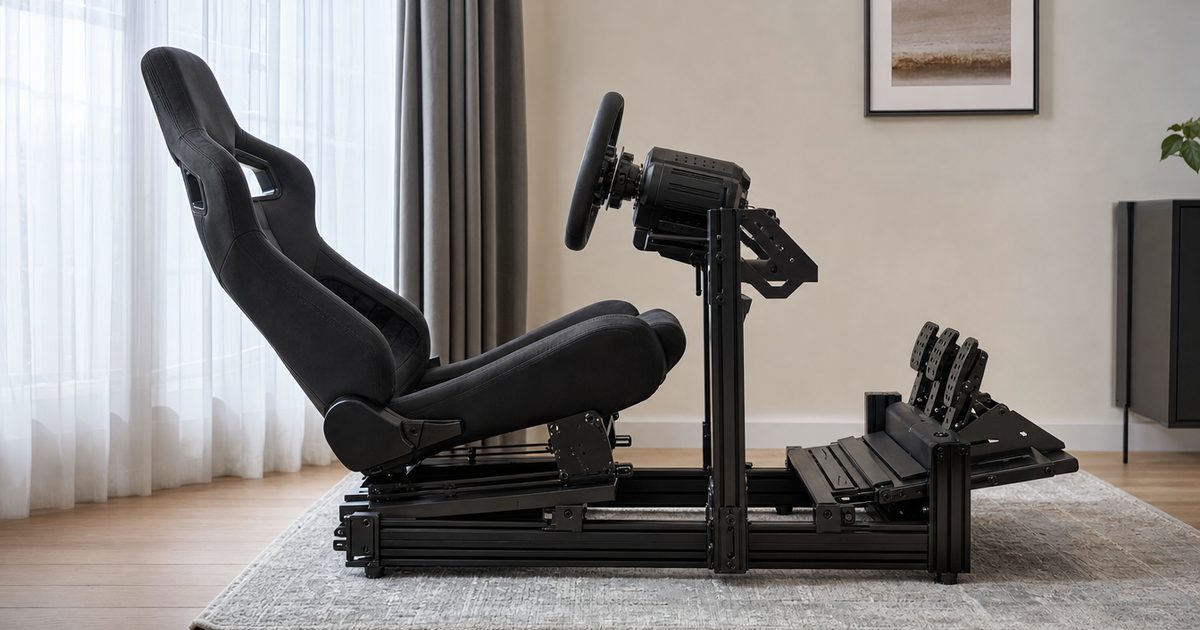
A rig that feels great for a ten-minute sprint can quietly destroy your back over a 45-minute league stint. For a while I assumed an aching back after race night was just part of the deal — the price of sitting still and concentrating. It wasn’t. It was my seating position, and a handful of adjustments fixed it. Here’s what actually worked on my own rig.
Why it aches in the first place
Sim racing is deceptively physical. You’re braced against a wheel that’s pushing back, pressing a firm load-cell brake with real force, and holding tension through your core and shoulders for the length of a stint. Get the geometry wrong and that load goes into your lower back and neck instead of being supported by the seat and your bracing points. The aches aren’t from the racing; they’re from fighting a bad position the whole time.
The good news: an aluminium-profile cockpit is endlessly adjustable, so almost every ache is fixable once you know what to change.
The adjustments that fixed mine
1. Seat-to-pedal distance — the big one
This was the single biggest fix. My seat was too far from the pedals, so I was reaching with my legs and pulling myself forward with my arms to press the brake firmly. That constant forward pull went straight into my lower back. I moved the seat closer until my braking leg had a comfortable bend at full pressure — knee not locked straight, not crammed up either. Suddenly my back wasn’t doing the bracing the seat should have been doing.
2. Seat recline and back support
I’d had the seat too upright, sitting bolt-vertical like an office chair. Reclining it slightly — a relaxed but alert angle, more like an actual race seat — let my back rest into the seat instead of holding itself up. If your seat has any lumbar support or you can add a small cushion in the lumbar curve, do it; the lower-back support is what stops the long-stint ache.
3. Wheel height and distance
My wheel was a touch too low and too far, so I was reaching down and out, rounding my shoulders forward. Raising it and bringing it back so my arms had a relaxed bend — elbows not locked, hands able to reach all the way around without leaning — took the strain out of my shoulders and neck. Your arms should be supported by their position, not held out in space.
4. Pedal angle and height
Tilting the pedal plate so the brake met my foot at a natural ankle angle stopped my foot from fighting the pedal. On a firm load-cell brake especially, a bad pedal angle makes you press with your toes and recruit your whole leg awkwardly. Get the plate angle so your leg pushes straight through.
How I dial it in now
When I set up — or after any change to the rig — I run a checklist:
- Sit as if mid-race, hands on the wheel, foot fully on the brake.
- Braking leg: comfortable bend at full pressure, no lock, no cramp.
- Back: resting into the seat, supported in the lumbar curve, not holding itself up.
- Arms: relaxed bend at the elbow, able to reach the full rim without leaning forward.
- Shoulders: down and back, not rounded toward the wheel.
Then I drive a longer stint than usual and pay attention to where any tension shows up. Tension is the tell — wherever you feel it building is where the geometry is wrong.
The honest bit
A lot of this is only possible because a real cockpit is adjustable. On a desk-and-office-chair setup you’re stuck with whatever the furniture gives you, which is part of why I eventually switched to a proper rig — the ergonomics alone were worth it, never mind the rigidity. If you’re getting back ache and you’re on a desk, some of these you can approximate; others you can’t, and that’s a sign your rig is part of the problem.
If you’re choosing a cockpit and want one with the adjustment range to actually fit you, I covered what to look for in the best sim racing cockpit guide. Get the position right and you can race a full stint with your head on the driving instead of your back.